Structure over confusion – a project report from modern HR process consultancy
In the spring of 2025, I had the privilege of supporting a major IT service provider in the financial sector as an external process consultant.
The mandate was clear: capture existing HR processes, document them systematically, and model them in ADONIS NP.
What sounds straightforward is, in practice, rarely so.
Processes are seldom tidy, linear or complete – and genuine clarity emerges only when one approaches them with structure, calmness and a sense for the realities of daily work.
Together with a colleague, I conducted numerous interviews over several weeks with HR stakeholders from areas such as Core HR, Learning, Recruiting, People Services and Career & Performance.
Our task was not merely to “record steps”, but to understand the lived reality:
Where do processes run smoothly?
Where do gaps appear?
Where have people built creative workarounds simply to keep the system functioning?
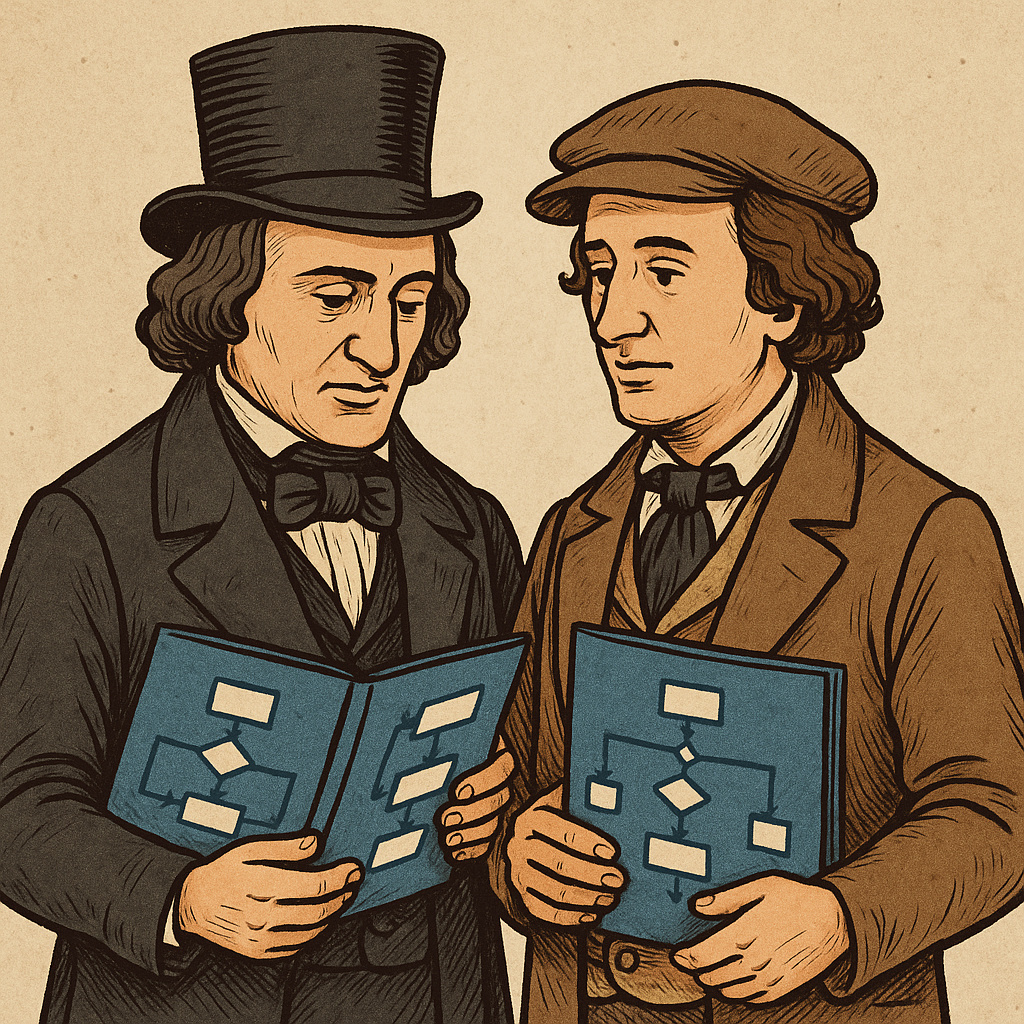
We were, in a way, the Brothers Grimm of process modelling –
wandering through the organisation, listening carefully, collecting stories.
Not fairy tales, of course, but processes.
And rather than documenting how they ought to be, we captured them exactly as they are lived.
The outcome:
Our approach was intentionally pragmatic:
No unnecessary formalism, no models for the sake of models.
The goal was to create process documentation that is useful:
A crucial factor was simple: listening well.
To truly understand processes, one must see them through the eyes of those who carry them every day – not merely through textbooks or theoretical frameworks.
✔ Good process consultancy requires empathy, structure and an eye for the essentials
✔ Tools like ADONIS NP are only as strong as the clarity behind the modeller’s thinking
✔ Thoughtful documentation builds transparency, trust and room for development
This project demonstrated once again that structured process work in HR is far more than an administrative exercise.
It brings order, relieves employees, and lays the foundation for genuine, sustainable improvement.
If you are looking for clarity, structure or a reliable partner for process modelling or documentation, I would be delighted to support you.